
Millions of people are quietly facing the same question — and the answer is more nuanced than the headlines suggest.
You lost weight. You felt good. Then life happened — insurance changed, the side effects got old, or your doctor said it was time to stop. And now, quietly, the scale is creeping back up. You’re not imagining it, and you’re absolutely not alone.
GLP-1 medications like Ozempic, Wegovy, Mounjaro, and the newer Retatrutide have been nothing short of revolutionary. For the first time in decades, people who had struggled with weight for years — despite doing “everything right” — finally had a tool that worked. The science behind them is real, the results are real, and for many people, the relief was profound.
But there’s a conversation that doesn’t happen nearly enough: what comes after.
If you’ve recently stopped a GLP-1 medication — or you’re thinking about it — here’s the honest, human truth about what your body goes through, and more importantly, what you can actually do about it.
~65%
of weight lost on GLP-1s is regained within 12 months of stopping
18–24mo
average timeframe for most patients to return to pre-treatment weight
First : Why Does the Weight Come Back?
Let’s start with something important — this is not a willpower failure. Not even close.
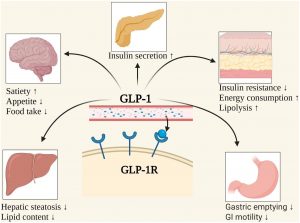
GLP-1 medications work by mimicking a hormone your body naturally produces after eating. They slow digestion, signal your brain that you’re full, and reduce appetite in a very real, physiological way. The problem is that when you stop taking the drug, those effects stop too. Almost immediately.
Your hunger hormones — ghrelin especially — bounce back, often with a vengeance. Your metabolism, which may have already slowed during weight loss, doesn’t automatically speed back up. And your brain, which had gotten used to lower calorie signals, resets to its prior baseline.
The Science
Obesity is a chronic condition driven by complex hormonal and neurological feedback loops — not simply a lack of discipline. GLP-1 medications address those loops pharmacologically. When the medication stops, the underlying biology reasserts itself. This is the same reason most diets “fail” long-term — the body fights to return to its set point.
The Timeline: What to Expect Week by Week
Everybody is different, but here’s a general sense of how the transition tends to unfold after your last dose:
Weeks 1–2 Appetite begins to return. Most people notice increased hunger signals, especially in the evenings. Nausea (a common GLP-1 side effect) typically fades — which many people find is actually a double-edged sword.
Weeks 3–6 Food cravings resurface more strongly. Portion control becomes harder without the pharmacological support. This is the most vulnerable window — and the most important time to have a plan in place.
Months 2–4 Weight regain typically begins for those without behavioral or medical support. The rate varies widely — some people regain a pound a week, others much slower. Muscle mass loss during the medicated period can now affect metabolism.
Months 6–18 Studies show the majority of regain happens in this window, with most returning to within a few pounds of their starting weight by the 18-month mark — particularly without targeted intervention.
The medication didn’t fail you — it did exactly what it was supposed to. But obesity is a chronic condition, and stopping treatment without a bridge strategy is like stopping blood pressure medication and expecting your numbers to stay normal.
The Muscle Problem Nobody Talks About
Here’s a piece of the conversation that deserves far more attention: on GLP-1 medications, people lose weight quickly — but a significant portion of that weight can be muscle, not just fat.
That matters enormously when you stop. Muscle is metabolically active tissue — it burns calories even at rest. When you lose it during rapid weight loss, your baseline calorie burn drops. So when hunger returns after stopping the medication, you’re now eating at the same level you always did, but your body is burning fewer calories than before. It’s a frustrating combination that isn’t your fault and has a straightforward fix — though it takes real commitment.
What the research says
Studies show that people who combined GLP-1 medications with consistent resistance training preserved significantly more lean muscle mass — and maintained more of their weight loss after stopping — compared to those who relied on the medication alone. Muscle is your metabolic insurance policy.
So — Is Stopping Always the Wrong Move?
No. And it’s important to say that clearly.
Some people stop because they’ve reached their goal and want to see how they maintain it naturally. Some stop because of cost, access, or medical reasons. Some are transitioning to a different medication or a lower dose. These are all valid, real-world decisions — and none of them make you a failure.
The goal is simply to stop with a plan, not without one.
What Actually Helps: A Practical Framework
The good news? We know a lot more now about what works in the transition period. Here’s where the evidence points:
Prioritize protein at every meal. Aim for 25–40g per meal. Higher protein intake supports satiety, preserves muscle mass, and helps stabilize appetite hormones naturally — doing some of what the medication was doing pharmacologically.
Start resistance training before you stop, not after. Ideally 2–3 sessions per week. Building muscle before stopping gives you a metabolic cushion that pays dividends for months.
Consider a clinical bridge strategy. This might include hormone optimization, peptide support, or a supervised transition protocol. A functional medicine or weight loss specialist can tailor this to your specific hormonal profile.
Address the gut health piece. GLP-1 medications also affect gut motility and the microbiome. Fiber intake, probiotic support, and anti-inflammatory nutrition can help your digestive system adapt to the transition.
Don’t do it alone. Whether that’s a dietitian, a coach, a medical provider, or even a community — accountability and support during this window makes a measurable difference in outcomes.
The Bigger Picture
Weight is not a character flaw. Neither is needing medication to manage it, nor is struggling when that medication stops. What we’re learning — slowly, imperfectly, as medicine always does — is that long-term weight management is a chron
What Happens to Your Body After You Stop Ozempic?
Millions of people are quietly facing the same question — and the answer is more nuanced than the headlines suggest.
Wellness Intelligence8 min readApril 2026
ic care journey, not a 6-month fix.
The most successful people we see coming off GLP-1s aren’t the ones who white-knuckled it through willpower. They’re the ones who used the medicated window to build habits, rebuild muscle, understand their hormones, and put a support system in place before they needed it.
If you’re facing this transition, know that biology is working against you — but it’s not insurmountable. The right support makes all the difference.
Bottom Line
Weight regain after stopping GLP-1 medications is common, well-documented, and — critically — not inevitable with the right preparation. The medications gave you a window. What you build inside that window is what lasts.