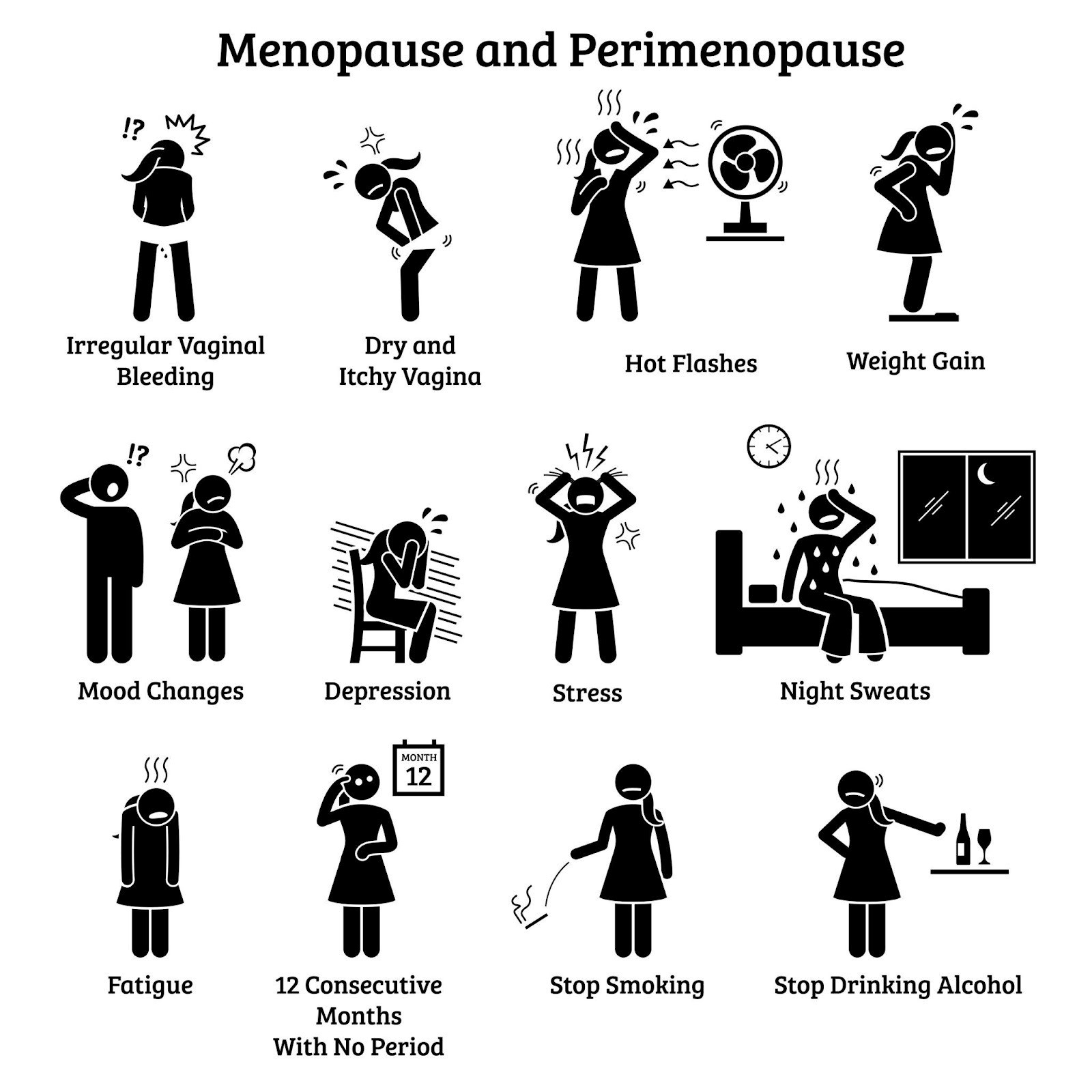

Perimenopause and menopause are major hormonal transitions — not just “a phase.” As estrogen, progesterone, and testosterone shift, women may experience:
- Hot flashes & night sweats
- Brain fog
- Mood swings or anxiety
- Poor sleep
- Weight changes (especially abdominal)
- Low libido
- Vaginal dryness
For many women, properly prescribed hormone replacement therapy (HRT) can significantly improve quality of life.
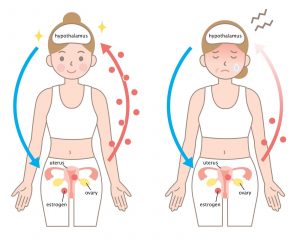
The 3 Key Hormones & How They Work
Estrogen
Estrogen supports the brain, bones, heart, skin, and vaginal health. It works by binding to estrogen receptors throughout the body, regulating how cells function.
Research shows systemic estrogen therapy is the most effective treatment for hot flashes and helps prevent bone loss when started appropriately.
(Source: North American Menopause Society, 2022 Position Statement)
Progesterone
If you have a uterus, progesterone is necessary with estrogen to protect the uterine lining. It also supports sleep and has calming effects on the brain through GABA pathways.
Micronized progesterone is often preferred due to its safety profile.
(Source: American College of Obstetricians and Gynecologists)
Testosterone
Women produce testosterone too. It supports libido, muscle mass, motivation, and energy.
Evidence supports carefully monitored testosterone therapy for postmenopausal women with hypoactive sexual desire disorder (Global Consensus Position Statement, 2019).
Why HRT Can Be a Game Changer
When individualized and monitored properly, HRT can:
- Reduce hot flashes by 75–90%
- Improve sleep and mental clarity
- Support bone health
- Improve mood and sexual wellness
For healthy women under 60 or within 10 years of menopause, benefits often outweigh risks when therapy is personalized.
(Source: North American Menopause Society)
Labs & Personalization Matter
While menopause is primarily a clinical diagnosis, labs help guide safe treatment. Common tests include:
- Estradiol
- Progesterone
- Total & Free Testosterone
- SHBG
- FSH
- Thyroid panel
- Lipids & metabolic markers
HRT is not one-size-fits-all. Your medical history, cardiovascular risk, clotting risk, and family history must all be considered.
The Most Important Factor: A Provider Who Listens
Hormone care should never feel rushed or dismissive.
You deserve a provider who :
- Takes your symptoms seriously
- Reviews labs thoughtfully
- Explains risks and benefits clearly
- Adjusts therapy based on how you feel
Menopause is a transition — not a decline. With evidence-based guidance and individualized care, this phase of life can feel balanced, energized, and empowering again.