
You’ve probably seen it on your feed. Someone rolling a small, needle-covered device across their face, then showing off skin that looks brighter, tighter, and somehow more “awake.” It looks a little intimidating, we get it. But once you understand what’s actually happening underneath those tiny needles, it starts to make a lot of sense. Microneedling isn’t a trend chasing hype. It’s one of the most well-researched, dermatologist-trusted treatments out there, and it works by teaming up with your skin instead of masking what’s going on underneath.
So What’s Actually Happening Under Those Needles?
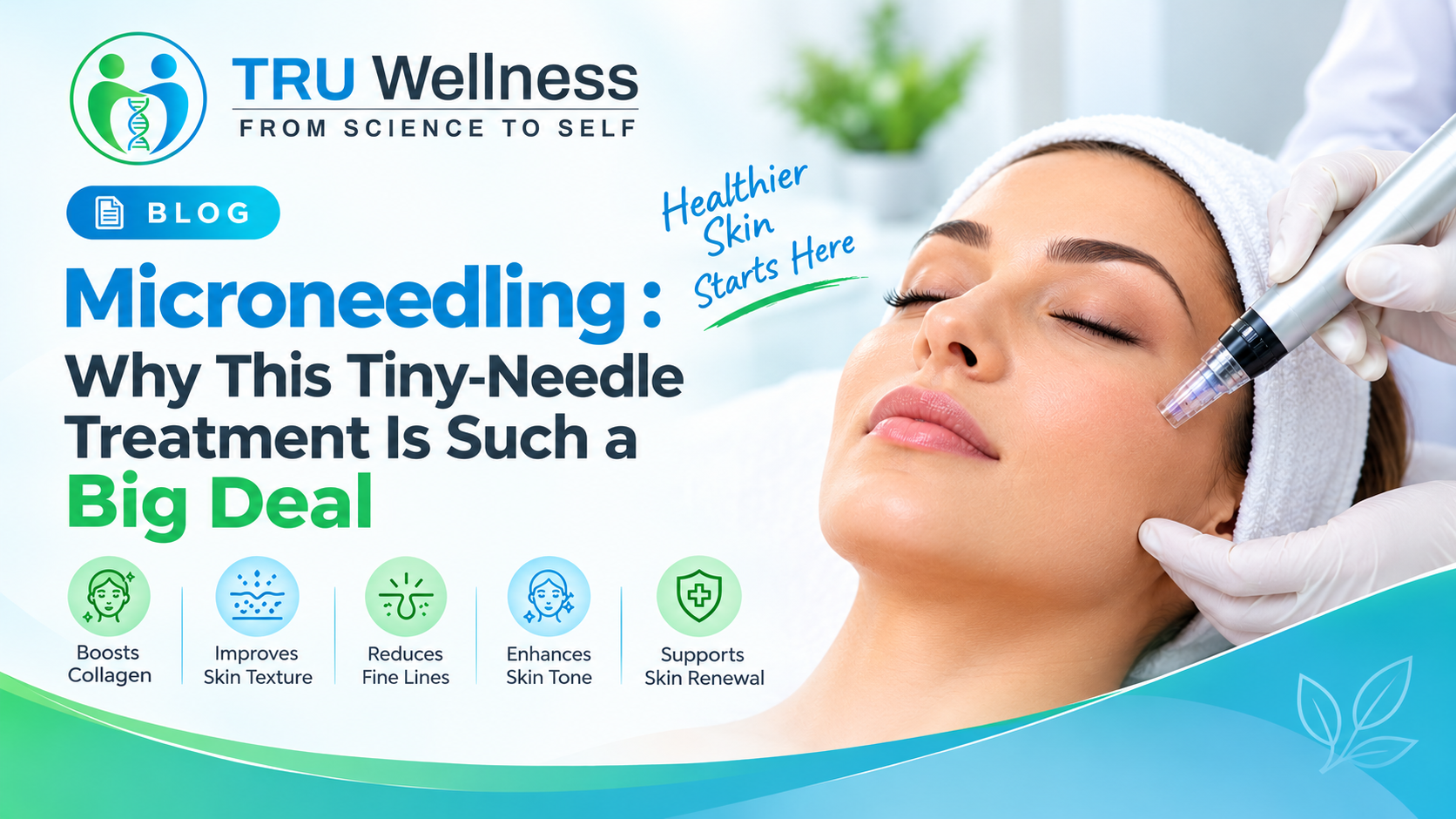
Here’s the beautifully simple part. A device with fine, sterile needles creates tiny, controlled micro-injuries across the top layer of your skin. It sounds bigger than it is, these punctures are so small, you can’t even see them once the treatment is done.
But your skin? I noticed. And it doesn’t stop to ask whether the injury was accidental or intentional. It just gets to work healing itself, sending collagen and elastin rushing to the area the moment those micro-injuries happen. Those two things, collagen and elastin, are basically your skin’s scaffolding. They’re what make it look plump, smooth, and youthful. So with each session, you’re not covering anything up. You’re giving your skin the nudge it needs to rebuild itself, a little stronger and a little smoother each time.
What Can It Actually Help With?
What we love about microneedling is that it’s not a one-trick treatment chasing a single concern. People come in for all kinds of reasons: fine lines and the early signs of aging, acne scars that just won’t fade, pores that feel more noticeable than they used to, uneven tone, or that overall tired, dull look that no serum seems to fix. And because the results come from your own skin healing itself, they tend to look like you, just a more rested, refreshed version.
Okay, But Does It Hurt?
This is the question everyone actually wants answered, so let’s just say it plainly: it’s far more comfortable than it looks in those videos. A numbing cream goes on beforehand, so most people describe it as a light scratching or vibrating sensation rather than anything sharp or painful. Afterward, your skin might look a little flushed, kind of like a mild sunburn, but that fades within a day or so.
What About Downtime?
Here’s the good news: there really isn’t much. That’s a big part of why so many people keep coming back to it. Your skin may stay slightly pink for a day, maybe two, but most people go right back to their normal day without anyone noticing anything happened. The only real “to-do list” afterward is gentle skincare, plenty of water, and being diligent about sunscreen while your skin does its healing work.
Why Patience Pays Off Here
Microneedling isn’t usually a one-time thing, and honestly, that’s the whole point. Your skin’s renewal process takes a little time to unfold, so results build session by session rather than showing up overnight. Most people do notice a brighter, smoother look after just one visit, but the real transformation, firmer texture, softened lines, more even tone, tends to reveal itself over the following weeks as new collagen keeps building. Think of it less like a quick fix and more like something you’re investing in for the long run.
Why It’s Worth Leaving This to the Professionals
We know the at-home derma-rollers are tempting. But there’s a real difference between those and professional microneedling, which uses medical-grade devices with precise, adjustable needle depths in the hands of a trained provider who actually understands your skin. That difference is everything. It’s what separates a treatment that genuinely stimulates renewal from one that just irritates the surface without giving you much back.
If microneedling has been on your mind, or you’re simply craving a real reset for your skin, it’s worth sitting down with a provider who can look at your skin and tell you honestly what to expect. Sometimes the simplest treatments, the ones that just help your body do what it already knows how to do, end up making the biggest difference.
References
- National Center for Biotechnology Information (NCBI). Microneedling in Dermatology: A Comprehensive Review of Applications, Techniques, and Outcomes. https://www.ncbi.nlm.nih.gov/pmc/articles/PMC11499218/
- U.S. Dermatology Partners. Microneedling: A Solution for Collagen Loss. https://www.usdermatologypartners.com/blog/what-is-microneedling-for-volume-loss/
- Dermoro. How Microneedling Works: Science of Collagen Stimulation. https://dermoro.com/how-microneedling-works/
- Metropolis Dermatology. Collagen-Boosting Effects of Microneedling. https://metropolisdermatology.com/collagen-boosting-effects-of-microneedling/