

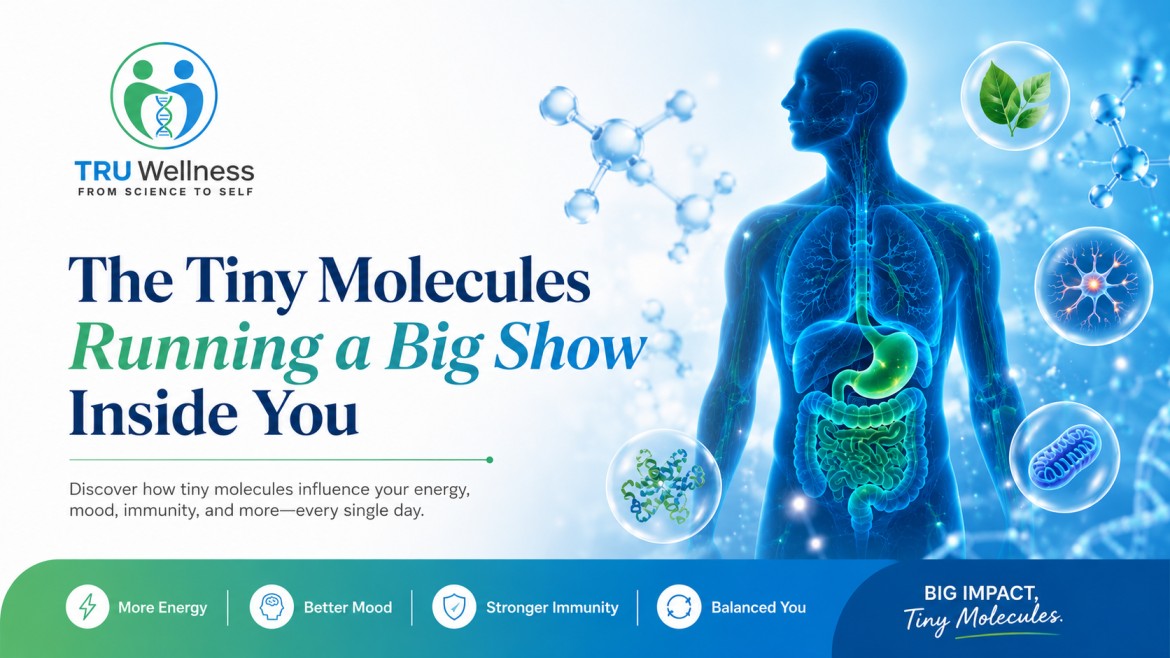

Your Body Is Already Full of Them
Here’s what makes peptides You’ve probably heard the word peptides lately — in skincare ads, gym supplements, maybe a wellness podcast. But strip away the marketing and you’re left with something genuinely fascinating: small molecules that have been quietly running biological operations inside every living thing on Earth for billions of years.
So what actually are they?
Smaller Than Proteins, Bigger Than You Think
A peptide is simply a short chain of amino acids — the same building blocks that make up proteins. The difference is scale. Where a protein might be a sprawling novel of thousands of amino acids, a peptide is more like a sharp, decisive sentence. Usually fewer than fifty “words” long. And in biology, brevity often means speed and precision.
Think of amino acids as letters. Proteins are long books. Peptides are urgent notes passed under the door.
so compelling from a human perspective: you’re not encountering a foreign technology. Your body has been making and using peptides your whole life.
Insulin — the hormone that manages blood sugar — is a peptide. Oxytocin, the so-called “love hormone” released during connection and touch, is a peptide. Endorphins, the molecules behind a runner’s high or the comfort of laughter, are peptides too. Even the way your immune system signals danger, or the way your gut tells your brain it’s full — peptides are in the middle of all of it.GLP-1 related therapies, such as semaglutide and tirzepatide, which work through peptide-based hormone pathways involved in appetite, glucose control, and metabolic signaling. FDA-recognized GLP-1 medications are used for type 2 diabetes and weight management under medical supervision.
Why Science Got Excited
What makes peptides interesting to researchers isn’t just what they do naturally — it’s how designable they are. Because they’re short and structurally simpler than large proteins, scientists can synthesize them, tweak them, and direct them toward specific targets in the body with a precision that larger molecules can’t match.
This has opened doors in medicine that feel quietly revolutionary. Peptide-based drugs now treat conditions ranging from diabetes and osteoporosis to certain cancers.
In skincare, certain peptides signal the skin to produce more collagen — not by adding collagen from outside, but by speaking the skin’s own language and asking it to do the work itself. That’s an elegant idea. When used responsibly, peptide therapy may support:
- Cellular repair and recovery
- Skin quality and collagen support
- Metabolic and body composition goals
- Energy and performance optimization
- Healthy aging and longevity-focused care
Because peptide therapy is highly individualized, it should always be guided by a trained clinical team and sourced through appropriate medical channels.
The Bigger Picture
There’s something almost philosophical about peptides when you sit with it. They’re proof that complexity doesn’t always require size. That a short sequence, arranged just right, can carry enormous meaning — triggering a hormone release, defending against bacteria, regulating hunger, moderating pain.
Life, it turns out, is partly a conversation happening at the molecular level. And peptides are some of its most eloquent speakers.
We tend to be dazzled by the large and visible — organs, systems, the dramatic machinery of the body. But peptides remind us that some of the most consequential things happen in the quiet, in the small, in the precisely worded message delivered to exactly the right place at exactly the right time.
Which is, honestly, true of a lot of things worth paying attention to.